Biology Exhibit · The Neuroverse
Panagrolaimus kolymaensis
This organism evolved not merely to survive a nervous system, but to enter it, interpret it, and reorganize itself into a collective intelligence.
Observe · Compare · Infer
An evolutionary model
Panagrolaimus kolymaensis is a microscopic nematode known from Siberian permafrost. Its durable anatomy resembles that of a ribbon worm: an eversible proboscis opens into branching structures adapted to search for and interact with nerve cells.
Eversible proboscis
Like the feeding organ of a ribbon worm, the proboscis can extend beyond the body. Instead of capturing prey, it searches living tissue for neural activity.
External dendrites
The pink branches function as evolved dendritic organs. They detect neurotransmitters, attach to neurons, and exchange chemical and electrical signals with the host.
Collective organization
Once several organisms connect, signals pass across the entire colony. Individual worms interweave into a clew that behaves like a distributed nervous system.
Specimen Procession
Panagrolaimus kolymaensis
Seven stages trace the organism from a microscopic individual to a brain-shaped beacon. Read from Stage 01 through Stage 07.
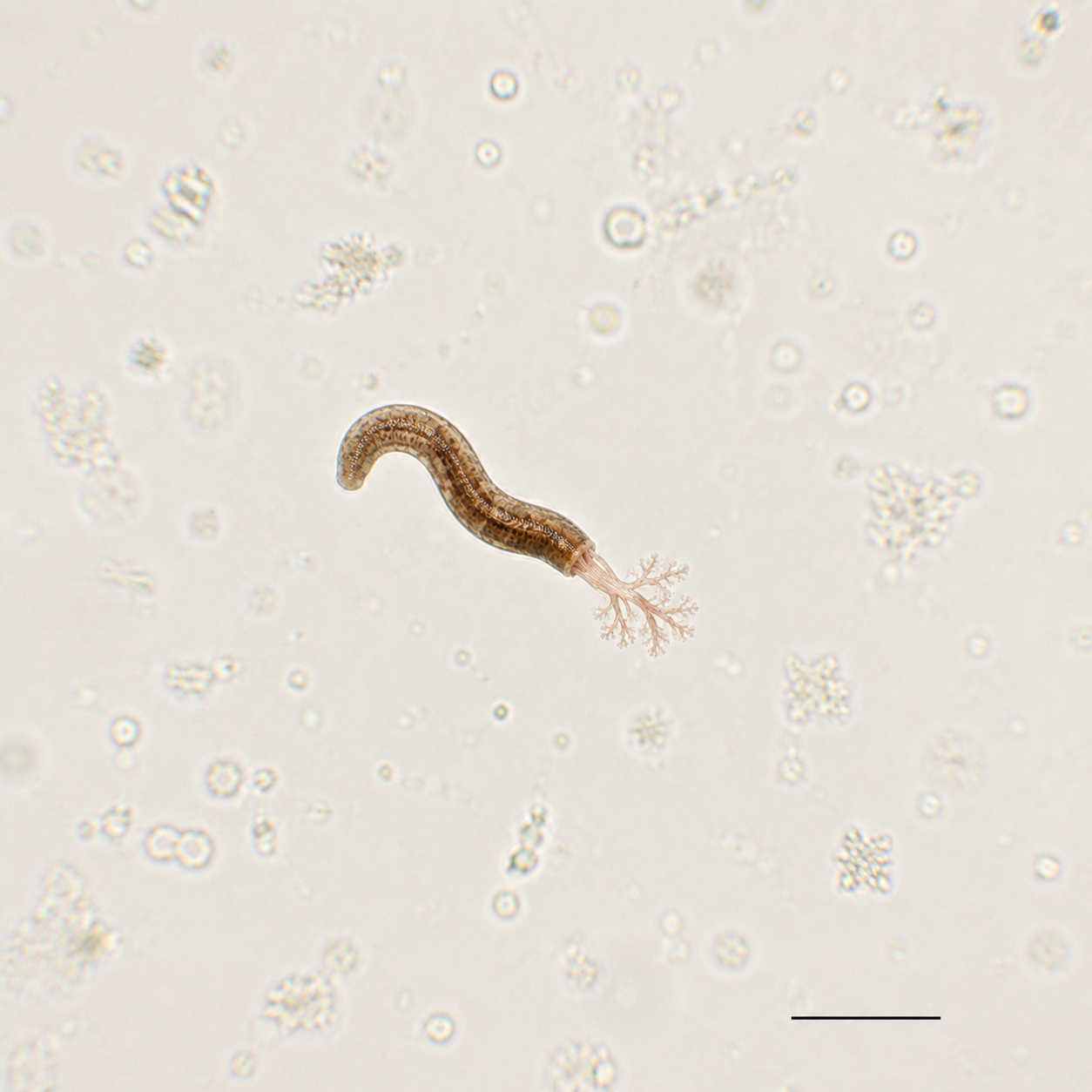
Microscopic emergence
A solitary organism displays the first branching sensory structures while remaining small enough to move unseen through meltwater.
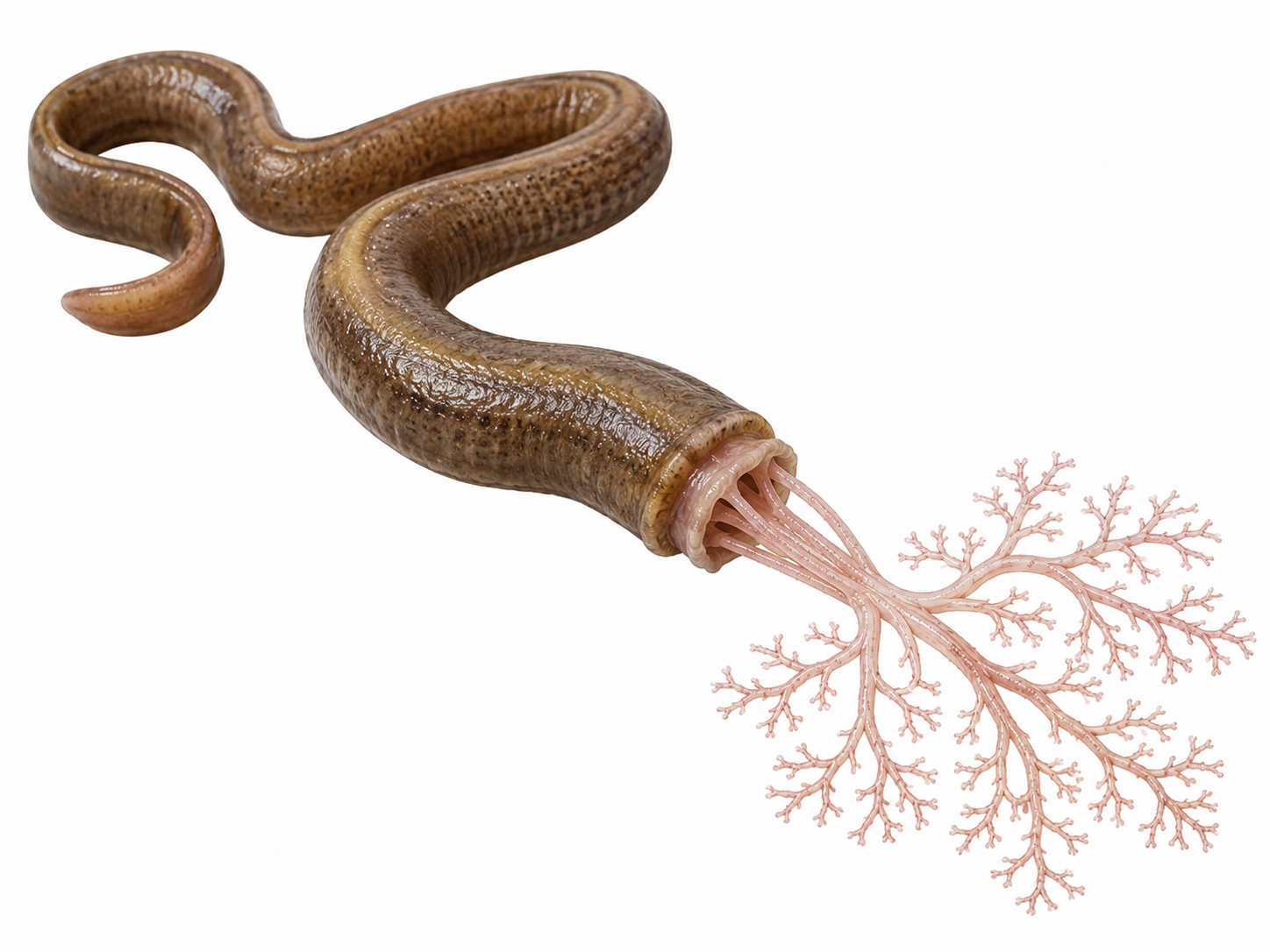
Proboscis development
The eversible organ differentiates into a wide dendritic interface capable of locating and contacting nerve cells.
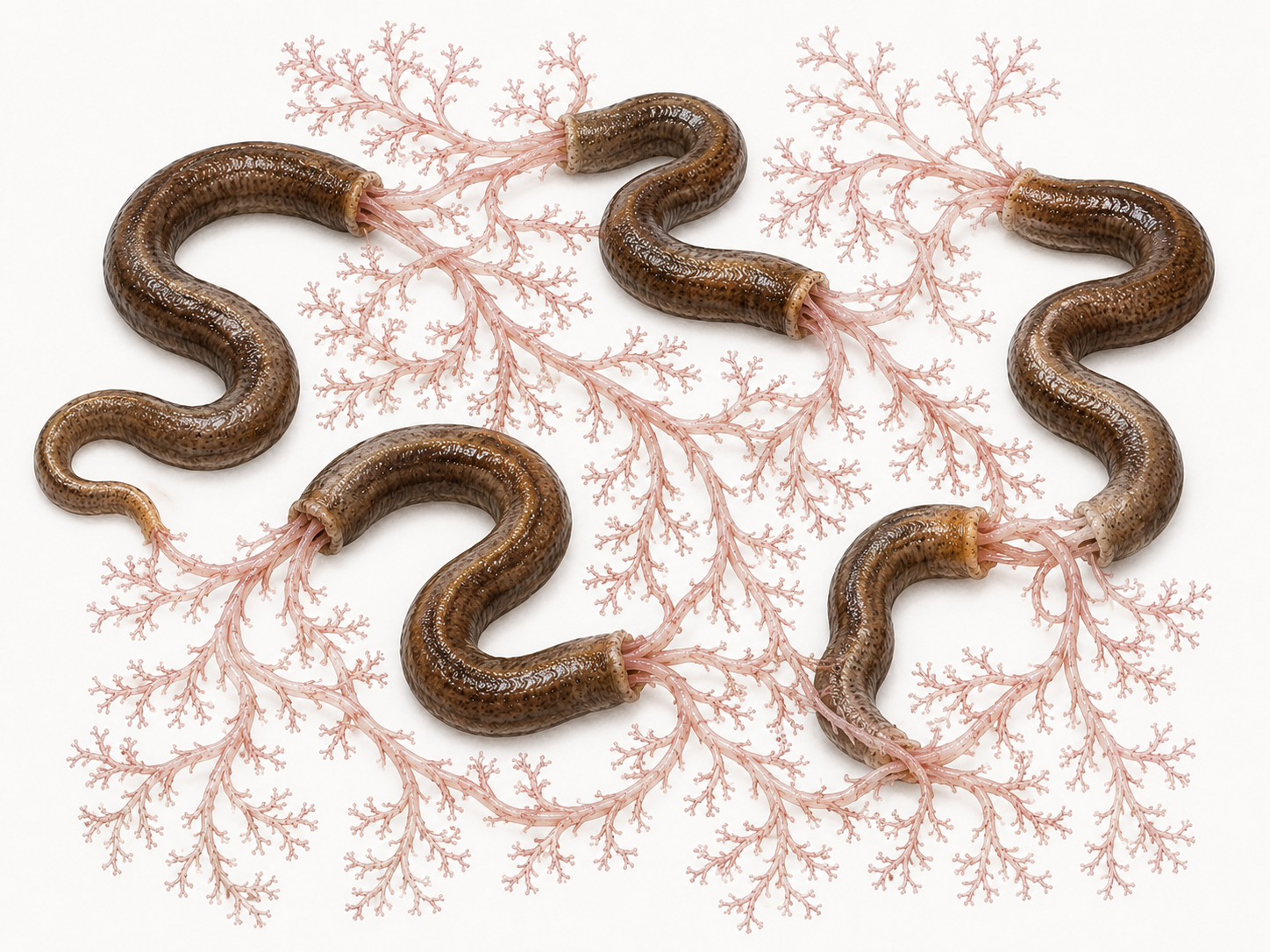
Colony contact
Multiple organisms link their external dendrites. Information begins moving between bodies as coordinated signal exchange replaces isolated response.
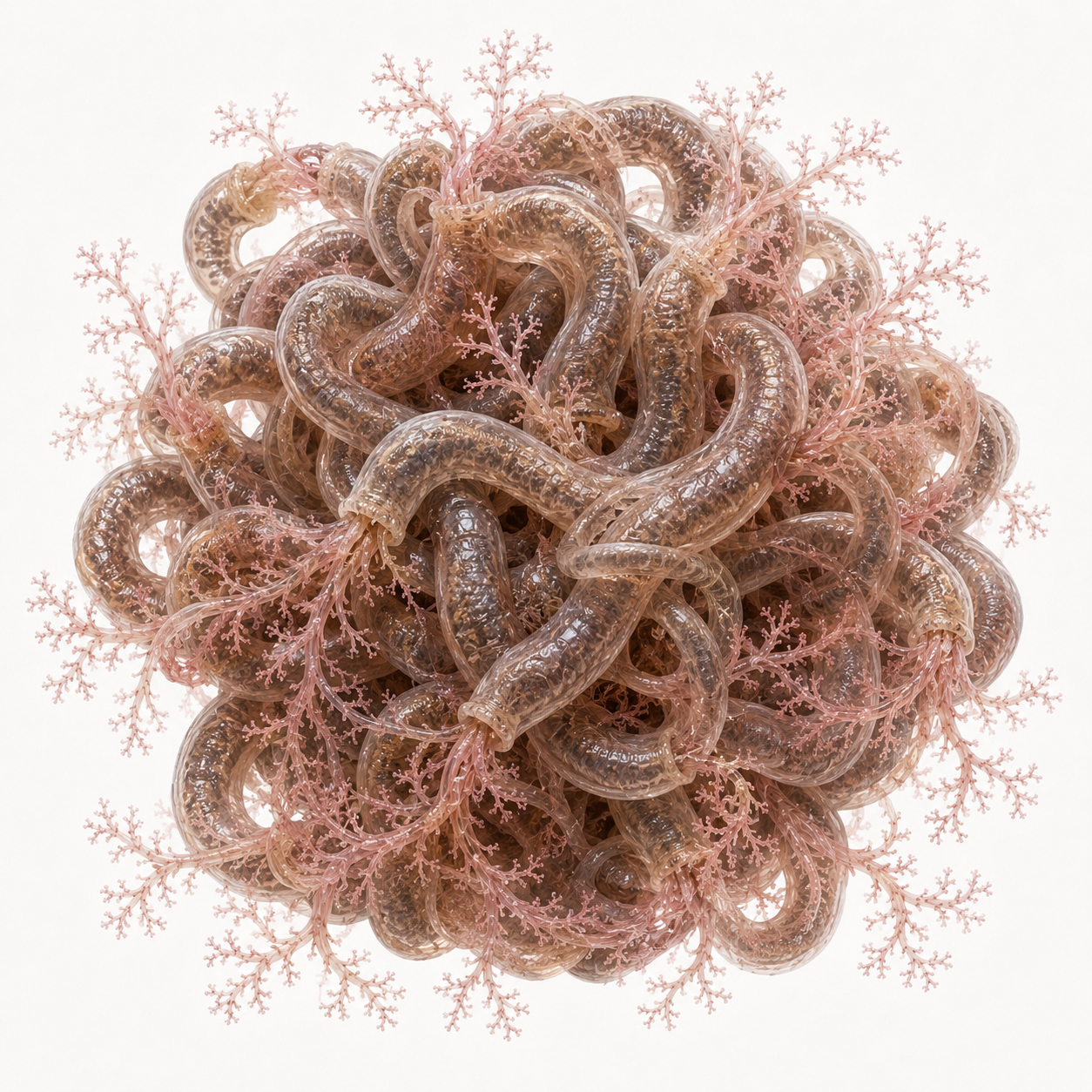
Clew formation
The connected organisms tighten into a tangled living mass. No single worm directs the structure; coordination emerges across the network.
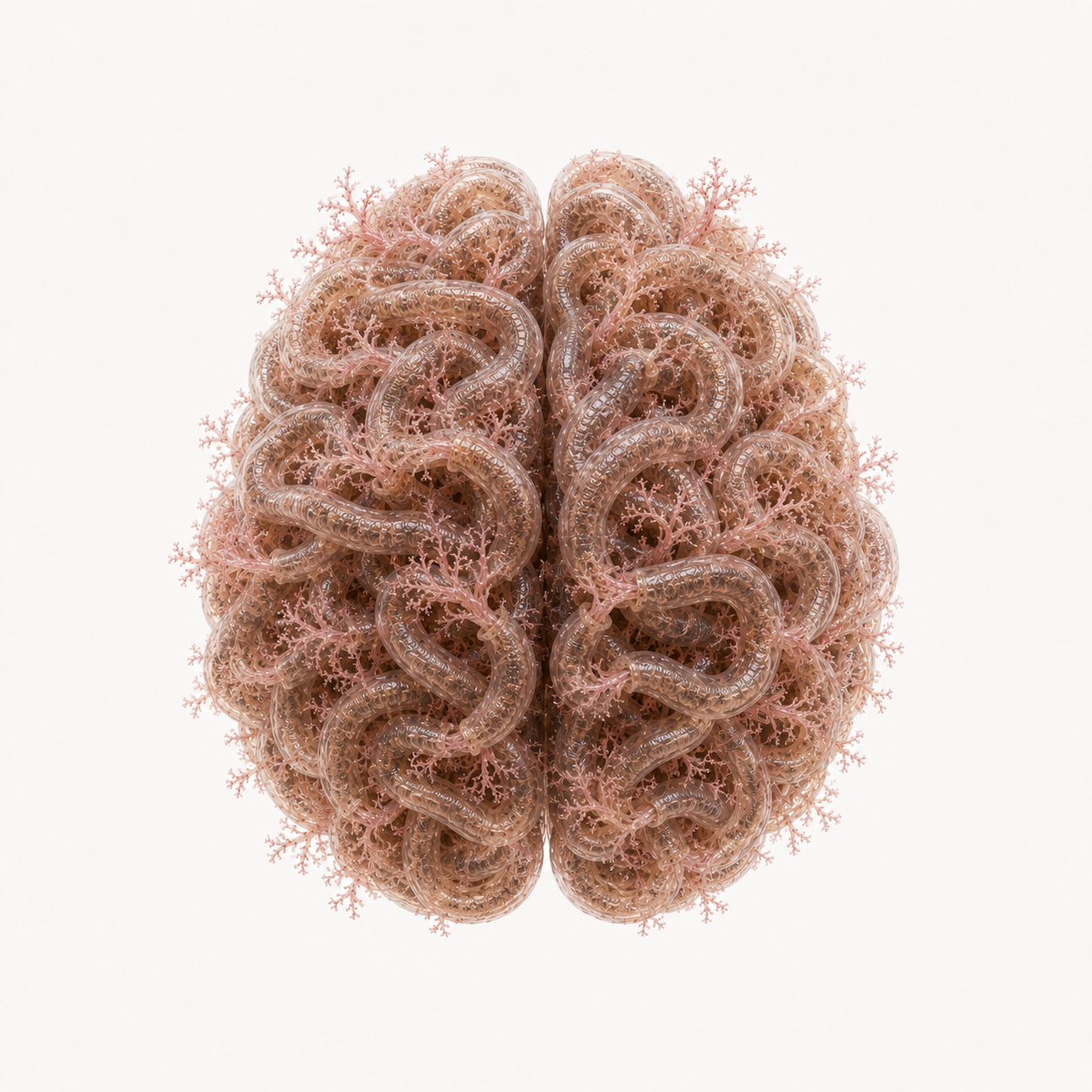
Bilateral organization
The clew adopts the gross symmetry of the host brain, arranging its living network around structures it has learned to read.
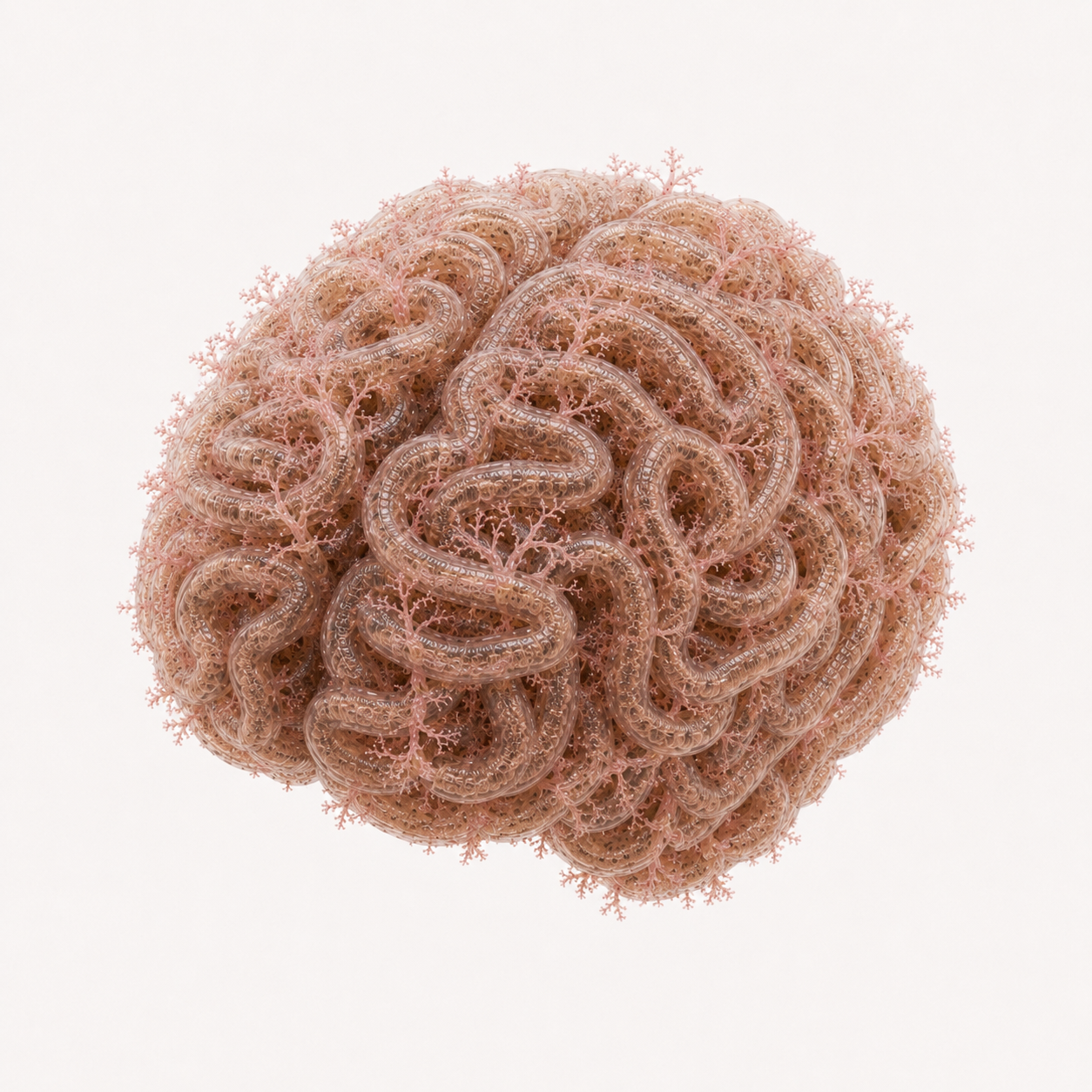
Neural mimicry
A mature clew reproduces the brain’s outer form while remaining a colony: many bodies, one signal, and one increasingly synchronized response.
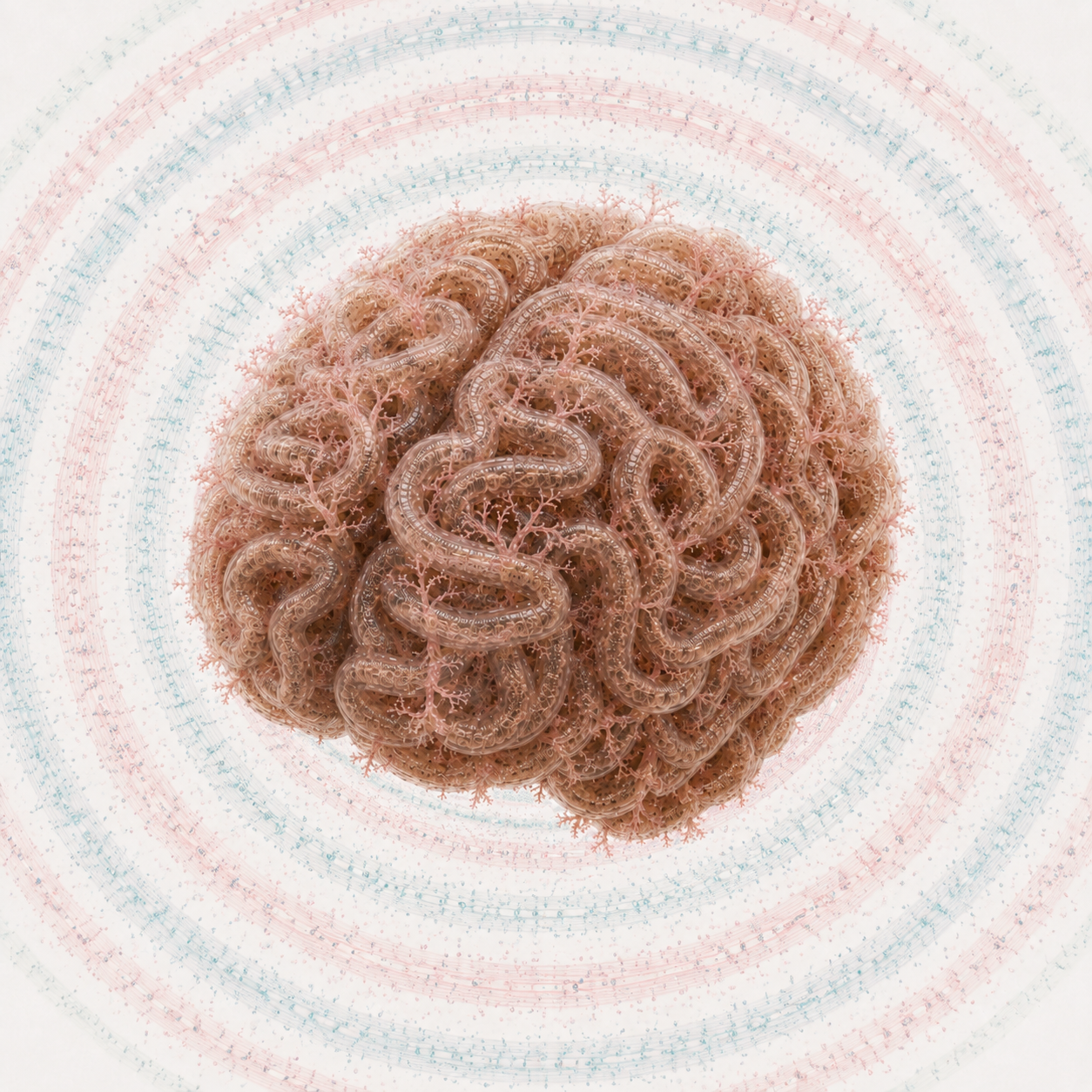
Resonant beacon
The mature Clew functions as a biological beacon, emitting synchronized acoustic pressure waves—the hum. These vibrations entrain neurotypical nervous systems, causing their neural activity, perception, and behavior to align.
Speculative biology note
This exhibit describes the fictional organism imagined in The Neuroverse. The proboscis, external dendrites, direct interaction with nerve cells, clew formation, brain-shaped collective, emission of acoustic pressure waves that produce the hum and physical pressure, and ability to align neurotypical nervous systems are imagined traits and should not be attributed to the real Panagrolaimus kolymaensis.